





Caring for a loved one with mobility issues can be both rewarding and challenging. Families and carers often take on significant responsibilities, from daily personal care to managing appointments and emotional support. Disability services play a crucial role in easing this burden by providing structured, professional assistance that improves overall wellbeing for both individuals and their families. By working alongside carers, these services ensure better balance, reduced stress, and improved quality of life.
Reducing Pressure on Families and Carers
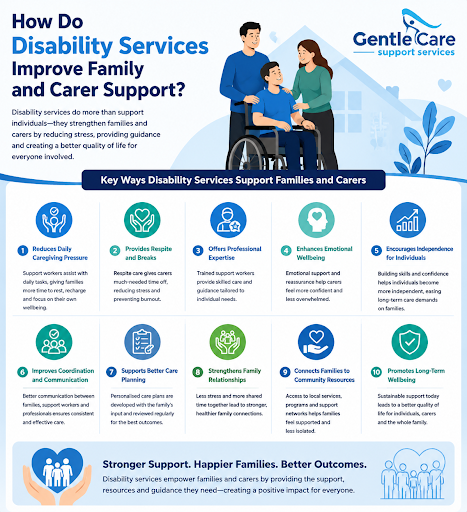
One of the most important benefits of disability services is the reduction of daily caregiving pressure. Professional support workers assist with tasks such as personal care, household duties, and community access, allowing families to take a step back when needed.
For example, families accessing disability services in Melbourne often find that structured support helps them manage responsibilities more effectively while still staying actively involved in their loved one’s care journey. This balance prevents burnout and supports long-term caregiving sustainability.
Providing Professional Expertise and Guidance
Disability services bring trained professionals who understand complex care needs, behavioural support, and NDIS planning. Their expertise ensures that individuals receive safe, consistent, and appropriate care tailored to their needs.
Working with experienced disability providers in Melbourne gives families access to structured care plans, progress monitoring, and guidance on navigating the NDIS system. This professional involvement helps carers feel more confident and supported in their role.
Enhancing Emotional Wellbeing for Families
Caring for a loved one can sometimes lead to emotional stress, anxiety, or isolation. Disability services help reduce this emotional burden by providing reliable support systems and respite care options. When carers know their loved one is in safe hands, they can focus on their own wellbeing, work commitments, and personal life. This improved emotional balance leads to healthier family relationships and stronger long-term care outcomes.
Encouraging Independence for Individuals
Disability services in Melbourne not only support carers but also empower individuals with disabilities to develop independence. By focusing on life skills such as cooking, communication, and community participation, individuals gain confidence and reduced reliance on family members. This shift allows carers to transition from full-time support providers to supportive family members, strengthening relationships and reducing long-term stress.
Improving Coordination and Care Planning
Effective disability services also improve coordination between families, healthcare professionals, and support workers. This ensures everyone involved is aligned on goals, routines, and care strategies. Families benefit from clear communication, structured planning, and consistent updates, making caregiving more organised and less overwhelming.
Disability services play a vital role in improving support for both individuals and their families. By reducing pressure, providing professional expertise, and enhancing emotional wellbeing, these services create a healthier and more balanced care environment. Families gain peace of mind, while individuals receive the structured support they need to thrive.
Get In Touch With us Today
For compassionate, reliable, and person-centred care, contact Gentlecare Support Services today and discover how professional disability services can transform family support and improve quality of life.