




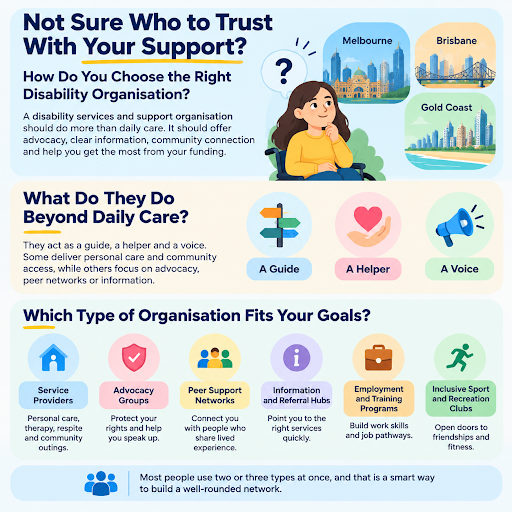
Searching for disability organisations Melbourne, Brisbane or Gold Coast can turn up a long list of names and big promises. A disability services and support organisation should do far more than deliver daily care. It should offer advocacy, clear information, community connection and real help getting value from your funding. This guide shows you what these groups do, how to compare them and how to choose a team that puts you first.
What Does a Support Organisation Really Do Beyond Daily Care?
The best groups act as a guide, a helper and a voice. Some deliver hands-on personal care and community access, while others focus on advocacy services, peer networks or information. Many combine several roles. Knowing which role you need most saves time and stops you paying for things you will not use.
Which Type of Organisation Fits Your Goals?
Different groups solve different problems:
- Service providers deliver personal care, therapy, respite and community outings.
- Advocacy groups protect your rights and help you speak up.
- Peer support networks connect you with people who share lived experience.
- Information and referral hubs point you to the right services quickly.
- Employment and training programs build work skills and job pathways.
- Inclusive sport and recreation clubs open doors to friendships and fitness
Most people use two or three types at once, and that is a smart way to build a well-rounded network.
Start your support journey today. Call Gentlecare Support Services and let our caring team guide you from first enquiry to ongoing support.
Can NDIS and Community Supports Work Together?
Yes, and combining them often stretches your budget further. An NDIS registered provider delivers funded supports linked to your plan goals. Community programs, including Local Area Coordination and Information, Linkages and Capacity Building, offer free or low-cost help that sits outside your plan. Using both gives you more choice and a wider circle of support.
Does Your Location Change the Support You Get?
Absolutely. Local knowledge shapes transport options, housing, activities and health links.Disability organisations Melbourne participants rely on are spread across a huge metro area, so suburb-based programs and travel training matter.
In Queensland, disability organisations Brisbane residents choose often connect home support with workplace and community programs.
On the coast, disability organisations Gold Coast families use tend to focus on accessible recreation and flexible in-home care.
Looking for an NDIS provider, locals recommend comparing disability support services options or exploring community support programs is a strong way to build a shortlist.
Even a quick search for disability support Melbourne groups can reveal which teams have real local roots.
What Belongs on Your Must-Have Checklist?
A reliable team is open, accountable and focused on you. Look for:
- NDIS registration and a clear quality and safeguards record
- Trained, screened and consistent support workers
- Pricing that follows the NDIS Price Guide
- Person-centred support with regular goal reviews
- A simple, fair complaints and feedback process
- Strong links with health, education and community services
Which Questions Make a First Meeting Count?
Go in prepared and ask plainly. What support do you offer, and what do you not offer? How do you match workers to participants? What happens if a worker is unavailable? How do you handle feedback? Can I see a sample service agreement? Good teams welcome these questions and answers without fuss.
What Red Flags Should Make You Walk Away?
Be wary of pressure to sign quickly, vague pricing and unclear staff training. Poor communication and a missing complaints process are also warning signs. Trust your instincts, because the right team makes you feel respected from the first conversation.
How Do You Keep Your Support Team Accountable?
Share your goals in writing and review them often. Keep records of support delivered and check invoices against your service agreement. Use support coordination if you want extra help managing providers. Speak up early when something changes, because honest, regular check-ins keep partnerships strong.
The Bottom Line: Is Your Support Team Working for You?
The right disability services and support organisation acts as a partner, not just a provider. Start with your goals, ask direct questions and choose a team that listens, respects your choices and delivers consistently.
Book a free consultation. Speak with Gentlecare Support Services to talk through your goals and explore supports that suit you.
Ready to Find Your Support Partner With Gentlecare Support Services?
Ask about your options. Contact us at Gentlecare Support Services to learn how our services can work alongside your NDIS plan and community supports.
How is an advocacy group different from a service provider?
Advocacy groups protect your rights and speak up for you, while providers deliver hands-on support.
Do I need an NDIS plan to access support?
Not always. Some community programs and information services are available without a plan.
What is ILC?
Information, Linkages and Capacity Building connects people with community resources and programs.
How do I check if a provider is NDIS registered?
Search the NDIS Commission register or ask the provider directly.
Can I use more than one organisation?
Yes. Many people combine providers, advocacy groups and community programs.
How much do services cost?
NDIS supports follow the NDIS Price Guide, while some community services are free or low cost.
Can I change organisations if I am unhappy?
Yes. You have choice and control, though you should check the notice period in your agreement.
What should a service agreement include?
Supports, prices, delivery times, cancellation terms and how to give feedback or make a complaint.
How do I make a complaint?
Start with the organisation, then contact the NDIS Quality and Safeguards Commission if it is not resolved.