





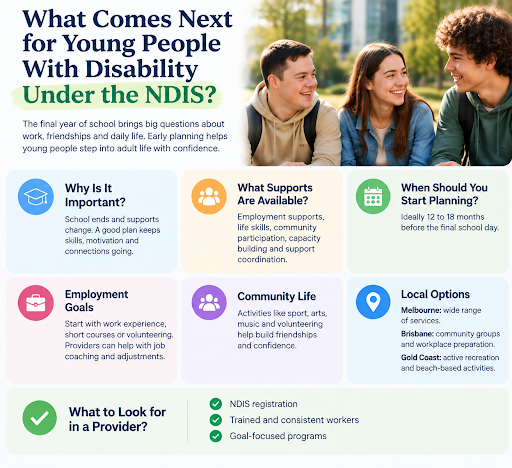
The final year of school brings excitement, and for many families it also brings big questions about work, friendships and daily life. Planning early with trusted disability services Melbourne, Brisbane or Gold Coast providers helps young people step into adult life with confidence instead of uncertainty. This guide explains what supports are available, how to plan ahead and what to look for in a provider.
Why Is the School Leaver Transition So Important?
School provides structure, routine and a built-in social circle. When it ends, those supports disappear overnight. Without a plan, some young people lose skills, motivation and connection. A well-timed transition plan keeps momentum going and turns the end of school into the start of something new.
What Supports Can Help After School?
The NDIS can fund several supports that suit this life stage:
- School Leaver Employment Supports, which help build work skills and job readiness over a set period
- Capacity building activities that grow confidence, communication and independence
- Life skills training such as cooking, budgeting, money handling and public transport
- Community participation programs including sport, arts, volunteering and social groups
- Support coordination to link goals with the right providers
Which support you can access depends on your plan, so check your funding categories early.
When Should You Start Planning?
Ideally, start 12 to 18 months before the final school day. Early planning gives time to gather assessments, request a plan review and try different activities. Talk with school staff, transition officers and therapists about strengths, interests and areas needing support. A young person who has tried work experience, travel training and social programs before leaving school usually adjusts faster.
How Can Employment Goals Become Reality?
Work does not have to mean a full-time job straight away. Many young people begin with work experience, short courses, volunteering or supported employment. Skills like time management, teamwork and workplace communication can be practised in safe settings. Providers can also liaise with employers, suggest reasonable adjustments and offer on the job coaching. Every small step builds a stronger resume and a stronger sense of purpose.
Start planning today. Call Gentlecare Support Services and let our caring team guide you from first enquiry to confident independence.
What Role Does Community Life Play?
Belonging matters as much as employment. Regular activities such as fitness classes, art groups, music sessions and volunteer roles help young people make friends and explore interests. Look for community participation programs that match personal passions, not just what is convenient. Choice is the heart of the NDIS, so goals should reflect what genuinely excites the participant.
How Do Local Options Differ Across Cities?
Each region has its own strengths, so local knowledge helps. Disability services Melbourne families access are spread across a large metro area, so transport training and suburb-based programs are key.
In Queensland, disability services Brisbane participants use often combine community groups with travel independence and workplace preparation.
On the coast, disability services Gold Coast providers frequently offer active recreation, beach-based activities and hospitality-focused work skills.
Searching for an NDIS provider Melbourne locals recommend, comparing NDIS support options or exploring school leaver programs Gold Coast can help you build a shortlist.
What Should You Look for in a Provider?
A strong provider treats the young person as the decision maker. Look for:
- NDIS registration and a clear quality and safeguards record
- Trained, screened and consistent support workers
- Goal-focused programs with regular progress reviews
- Transparent pricing that follows the NDIS Price Guide
- Strong links with schools, employers and community groups
- Willingness to involve family while respecting independence
Ask how the team measures progress and adapts support as goals change.
How Can Families Support the Transition?
Families play a powerful role. Encourage decision making at home, from choosing meals to planning outings. Practise routines like catching a bus or shopping with a list. Celebrate small wins and stay open to new ideas. Letting go a little at a time builds confidence for everyone involved.
The Bottom Line: Is Your Young Person Ready for What Comes Next?
The move from school to adult life is easier with early planning, clear goals and the right people alongside you. Start the conversation now, explore your options and choose a team that listens.
Ask about transition programs. Contact Gentlecare Support Services to learn how skills, work and community activities can fit your plan.
Ready to Plan the Next Chapter With Gentlecare Support Services?
Book a free consultation. Talk with Gentlecare Support Services about your goals and explore support for life after school.
When should we start planning?
Ideally 12 to 18 months before the final school day.
Can the NDIS help with finding a job?
Yes, through employment supports, skill building and work experience linked to plan goals.
Do we need a plan review before leaving school?
Often yes, especially if goals or support needs are changing.
Can my young person keep attending activities they enjoy?
Yes. Community and social activities can be funded when they link to plan goals.
What is support coordination?
It helps to understand your plan, find providers and make the most of your funding.
How do I choose the right provider?
Check NDIS registration, staff training, pricing, reviews and a person-centred approach.
Can we try a provider before committing?
Many providers offer trial sessions or short blocks of support.
Can family be involved in planning?
Yes, though the young person’s preferences should lead decisions.
What if our goals change later?
You can request a plan review and adjust support at any time.